If you are searching for ways to shrink your prostate naturally, you probably want practical relief: fewer interruptions, easier urination and less worry about your next bathroom visit.
Some lifestyle changes can help manage symptoms of an enlarged prostate. However, feeling better does not necessarily mean the gland has become smaller. Foods, supplements and online programmes should not be assumed to produce that result.
Researching The Prostate Protocol? View the seller’s information about The Prostate Protocol to examine its claims and purchase terms. This is an affiliate link. We have not inspected the full programme or verified its claimed health outcomes.
This guide explains what everyday habits may help, where natural remedies have limitations and when medical assessment matters.
Seek emergency care if you cannot urinate. Blood in the urine, severe lower abdominal pain, or urinary symptoms with fever and chills also need prompt assessment. Do not wait for a supplement, diet change or online programme to work.
Can an enlarged prostate shrink naturally?
There is no reliable basis for promising that a particular food, tea, exercise or commercial programme will shrink an enlarged prostate.
Lifestyle measures can support health and help manage some urinary symptoms. Whether the prostate itself has become smaller requires appropriate clinical assessment.
Three different outcomes are often confused:
| Outcome | What it means |
|---|---|
| Symptom improvement | Urination becomes less troublesome or interferes less with daily life |
| Better bladder control | Leakage or urgency improves |
| Reduced prostate size | The gland itself becomes smaller |
When considering a remedy, ask: Which outcome was actually measured?
A product described as providing “prostate support” has not necessarily been shown to improve urinary symptoms or reduce prostate size.
Understand what is causing your symptoms
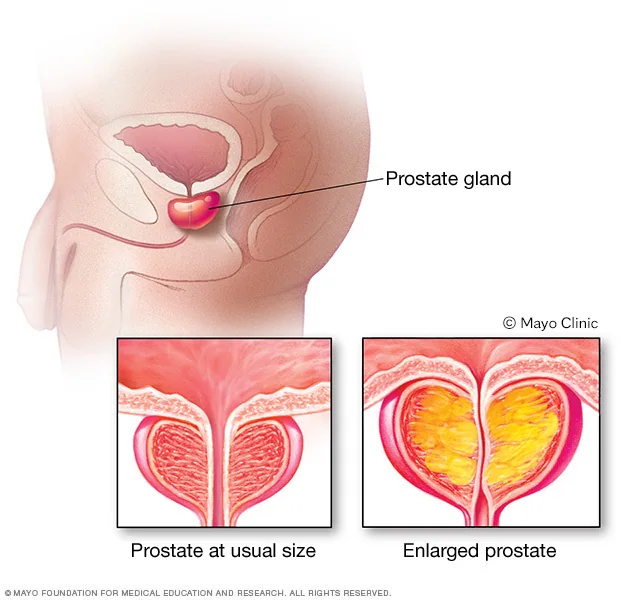
Benign prostatic hyperplasia, or BPH, is noncancerous enlargement of the prostate. The gland surrounds part of the urethra below the bladder, so enlargement can interfere with urine flow.
Possible symptoms include:
- A weak or slow urine stream.
- Difficulty starting urination.
- A stream that stops and starts.
- Frequent or urgent bathroom visits.
- Waking at night to urinate.
- Feeling that the bladder has not emptied.
Prostate size and symptom severity do not always match. Similar symptoms can also result from infections, bladder problems, medicines and other conditions.
Start with our enlarged prostate symptoms guide, or read the BPH overview if you want to understand the condition.
What if pain is the main problem?
Prostatitis includes conditions involving prostate inflammation or chronic pelvic pain. Pelvic discomfort and pain during or after ejaculation may occur.
Bacterial prostatitis requires appropriate medical treatment. Persistent pelvic pain does not always mean a bacterial infection.
Our prostate inflammation guide explains the differences. Avoid choosing treatment solely because several conditions share a symptom.
Practical habits that may help BPH symptoms
Adjust when you drink
Reducing large drinks shortly before bedtime or an outing may help with frequency. Continue drinking adequately during the rest of the day rather than severely restricting fluids.
If you have a prescribed fluid allowance for another medical condition, follow your clinician’s instructions.
A useful starting question is: “Am I drinking much of my daily fluid late in the evening?”
Nighttime urination also has causes beyond BPH. Our nighttime urination guide explains what to record and discuss.
Review caffeine and alcohol
Caffeine and alcohol can make urinary symptoms more troublesome for some people. Consider reducing them and observing your response.
Count tea, coffee, energy drinks and alcoholic drinks when reviewing your routine. Switching to an herbal drink does not make the fluid volume irrelevant.
Our tea and prostate health guide compares beverage options and explains the limits of herbal claims.
Give yourself time in the bathroom
Try to relax rather than push or strain.
Your clinician may suggest waiting briefly after urinating and trying again. Persistent difficulty emptying still needs assessment, even if small adjustments help.
Read our weak urine stream guide if flow has become slow or interrupted.
Keep active
Choose physical activity you can maintain, such as walking, swimming or suitable strength training.
Exercise supports general health, but a particular movement should not be presented as a proven way to shrink the prostate.
Explore our exercise and prostate health guide and daily lifestyle changes for BPH.
Ask about medicines
A doctor or pharmacist can check whether medicines you use might worsen urinary symptoms.
Bring a list of prescriptions, cold remedies, allergy products, sleep aids and supplements. Do not stop prescribed treatment on your own.
Our medicines and urinary symptoms guide explains why some everyday products deserve a review.
What should you eat for prostate health?
Treat food choices as part of balanced nutrition, rather than a prescription to shrink the gland.
A practical eating pattern can include vegetables, fruit, beans, whole grains, appropriate protein foods and unsaturated fats. Choose changes that fit your preferences and any medical dietary advice you have received.
Be cautious about claims that one ingredient is a “prostate cure.” The nutritional value of a food is different from evidence that it treats BPH.
Use our foods for prostate health guide for meal ideas and realistic expectations.
Related articles explain:
A nutrient’s role in the body does not establish that taking extra amounts treats prostate enlargement. Ask whether you have a specific reason to use a supplement.
Do herbal supplements shrink the prostate?
Evidence needs to be assessed ingredient by ingredient. “Natural” does not guarantee effectiveness or freedom from side effects.
Saw palmetto is widely marketed for urinary symptoms. However, NCCIH reports that a review of 27 studies found little or no benefit from saw palmetto used alone for BPH symptoms. Evidence for combinations containing it was less certain.
Our saw palmetto for BPH guide examines the research, dosage claims and safety.
For other products, ask:
- Was the actual formula tested?
- Were the participants similar to the people buying it?
- Did the study measure symptoms, urine flow or prostate size?
- Was the improvement meaningful?
- What side effects and interactions were assessed?
Do not assume that a tea and a concentrated extract are interchangeable. Our herbal supplements guide compares common ingredients and their limitations.
Comparing a paid programme with other options? Read the seller’s current Prostate Protocol information and check what you receive, the total price and refund conditions. This is an affiliate link. A sales page or testimonial does not establish medical effectiveness.
Can Kegel exercises or yoga help?
Kegel exercises train pelvic-floor muscles involved in bladder control. They do not directly exercise or shrink the prostate.
Correct technique includes both contraction and relaxation. More repetitions are not automatically better, and strengthening exercises may be unsuitable when the pelvic floor is already overly tense.
Read our Kegel exercise guide for men. If an exercise causes pain, stop and seek advice.
Yoga may offer gentle movement and relaxation, but a pose should not be promoted as a proven prostate-shrinking treatment. See our yoga and prostate health guide.
Stress management can also form part of care for some people with chronic pelvic pain. This does not establish that stress caused prostate enlargement. Our stress management guide covers practical approaches.
When are medical tests or treatment needed?
Persistent, changing or troublesome urinary symptoms deserve assessment.
A clinician may use your history, an examination, urine testing and selected further tests to investigate the cause. A bladder scan or urine flow test may help assess emptying.
PSA testing needs context. An elevated result can occur with noncancerous conditions, and screening has potential benefits and harms. PSA is not a direct measurement of prostate size or a simple test of whether a natural remedy is working.
Our prostate check-up guide helps you prepare.
What treatments are available for BPH?
Options range from monitoring and daily habit changes to medicines and procedures.
Alpha-blockers can relax muscles around the prostate and bladder outlet to help urine flow. Other medicines, including finasteride, can reduce prostate size over time in appropriate patients.
Procedures may be considered when symptoms remain troublesome or complications develop.
Read our enlarged prostate treatment options guide for a comparison of approaches and questions to ask.
Useful questions include:
- What is the most likely cause of my symptoms?
- Am I emptying my bladder adequately?
- What outcome should this treatment improve?
- Which side effects matter for my circumstances?
- When should we review progress?
A practical way to track symptoms
Keep a short record of drinks, bathroom visits, nighttime awakenings and urinary symptoms. A three-day diary can help make the pattern clearer.
For example, “I woke three times on each of these nights” is more useful than “I go frequently.”
Record changes honestly, including days when symptoms do not improve. If your clinician wants measured urine volumes, ask how to collect them.
Tracking supports an assessment; it cannot rule out infection, retention or another condition. Do not delay urgent care to finish a diary.
Considering The Prostate Protocol?
Before paying for an online programme, separate what it provides from what it promises.
An educational guide might organise information into an approach you find convenient. That does not establish that it can shrink your prostate, replace medication or prevent complications.
Our Prostate Protocol sales-page review examines advertised contents, purchase terms and medical claims. It is not a hands-on review of the paid material.
Ask for a sample or contents page, examine the evidence behind health claims and check the current refund procedure before buying.
Frequently asked questions
If I urinate more easily, has my prostate become smaller?
Not necessarily. Symptoms and prostate size are separate measures. Your clinician can explain what has changed and whether further assessment is needed.
What is the best natural remedy for an enlarged prostate?
There is no single natural remedy established as the best way to shrink the prostate. Appropriate daily habits may help symptoms, while treatment depends on the cause and severity.
Should I try supplements before seeing a doctor?
Persistent urinary symptoms deserve assessment. Supplements should not delay evaluation, particularly when symptoms are worsening.
Can I replace BPH medicine with diet or an online programme?
Do not change prescribed treatment without discussing it with your clinician. Feeling better does not establish that medication is no longer needed.
Which guide should I read first?
Start with the symptoms guide if you are unsure what is happening. If you have a diagnosis, explore treatment options alongside the food and lifestyle articles.
Want to inspect The Prostate Protocol offer? Visit the seller’s page through our affiliate link. Review its claims and purchase terms before paying. We may earn a commission; this does not establish that the programme will shrink your prostate.
Resources
- NIDDK: Enlarged prostate—benign prostatic hyperplasia
- NHS: Enlarged prostate
- NCCIH: Saw palmetto—usefulness and safety
- NIDDK: Kegel exercises
- NIDDK: Urinary retention
- National Cancer Institute: PSA test fact sheet
- NIDDK: Prostatitis—inflammation of the prostate
Affiliate disclosure: This article contains affiliate links. If you purchase through them, we may earn a commission.
Medical disclaimer: This content provides general information and does not replace diagnosis or personalised medical advice. Consult a qualified healthcare professional about symptoms or treatment changes. Inability to urinate requires emergency medical care.